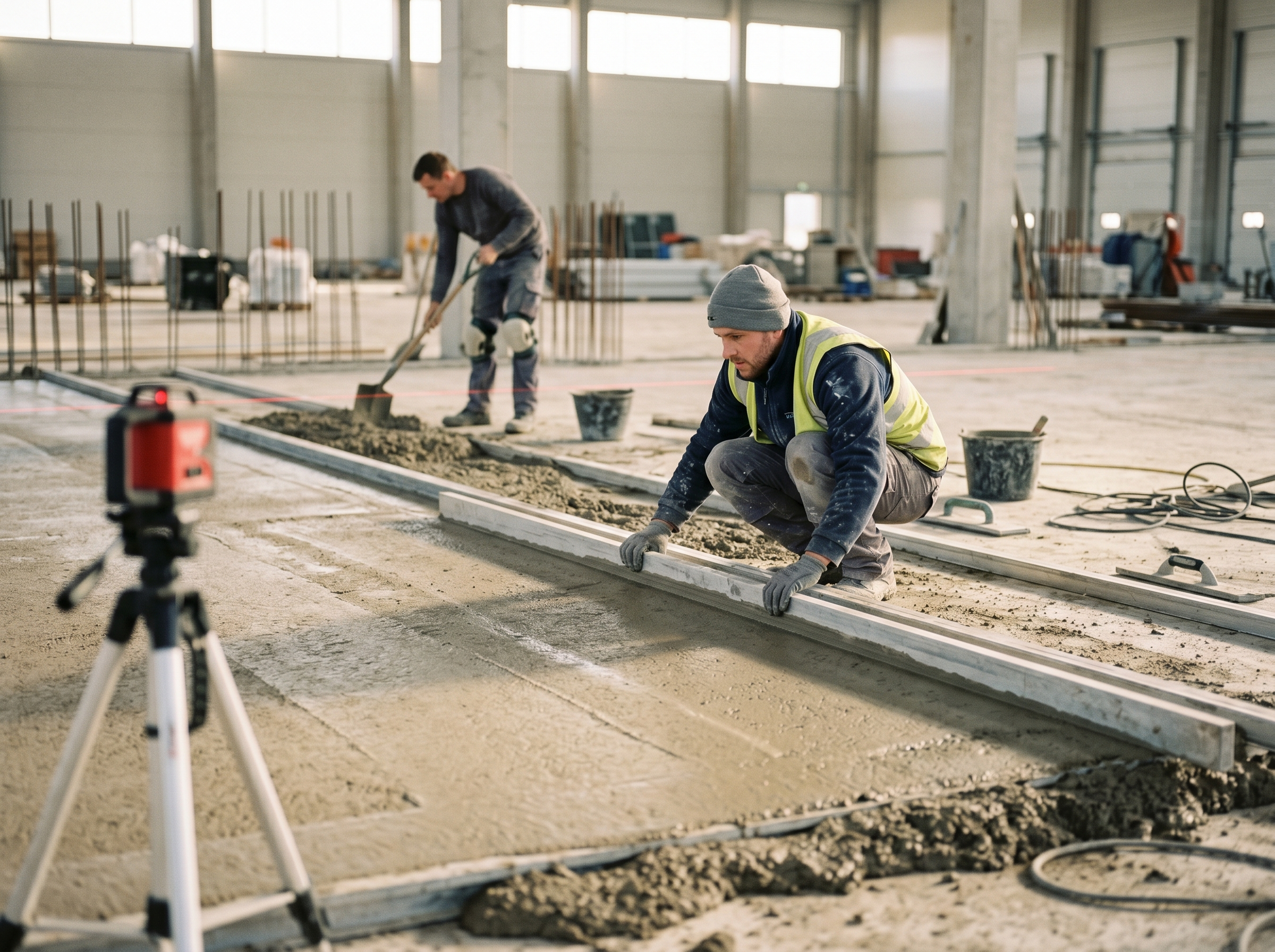
How we lay a floor
A precise process, a measurable result. On-site mixing, laser levelling and DIN testing.
Materials on site
We bring fractioned sand, cement and metal or polypropylene dispersed reinforcement.
Mixing with MIXMANN
The mix is prepared on site in strict order and pumped through hoses under air pressure to the placement area.
Laser levelling
Heights are set with a laser level and the surface is pulled flat with aluminium screed rails.
Grinding & testing
The surface is ground, and strength, thickness and abrasion resistance are tested to DIN.
DIN-standard quality
To confirm a floor is truly to Līmenī standard, we run two kinds of testing, fresh mortar and hardened screed. The DIN standard divides cement screed into strength classes from C12 to C35, where the figure is the force (N/mm²) the screed can bear. Beyond strength, we test thickness and abrasion resistance.
Over the years, our director has been glad to pass on the expertise gathered, in lectures and seminars for students and construction professionals.
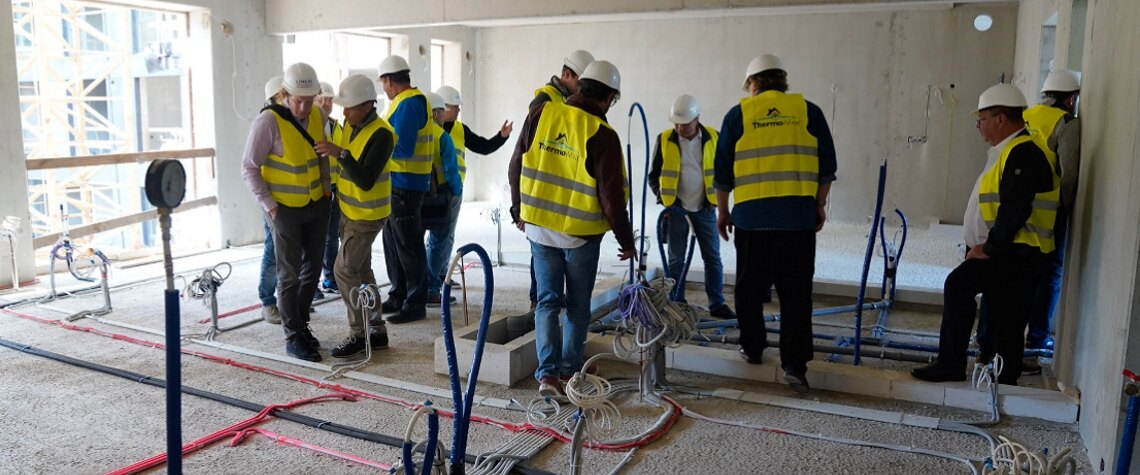
The tools we work with
Professional equipment lets us work fast, precisely and at scale.
MIXMANN mixer
PneimoWe mix the screed on site and pump it through hoses under air pressure straight to the placement area, even on upper floors.
Laser level
±1 mmHeights are set with a laser and the surface pulled flat with aluminium screed rails to millimetre accuracy.
Dispersed reinforcement
ŠķiedraSteel or polypropylene fibre is mixed into the mass to reduce cracking and increase durability.
Grinding machine
FinišsThe hardened surface is ground to the required smoothness, ready for a covering or left as exposed polished concrete.
Strength for every application
The DIN norm divides cement screed into classes from C12 to C35, the figure is the load (N/mm²) the screed can bear.
C12
Residential rooms
C20
Offices, public space
C25
Retail, heavy traffic
C35
Industrial, warehousing
Tell us about your project
Send the scope and timeline, we'll prepare a quote and recommend the right floor system.